
In 2026, speed alone is no longer a competitive advantage. Precision, validation, and intelligent iteration define successful product launches.
Markets evolve quickly. Customer expectations shift faster. Regulatory frameworks tighten. In this environment, prototype fabrication and testing are not preliminary steps. They are strategic milestones that determine whether a concept survives commercialization.
Turning an idea into a market-ready product requires structured engineering, disciplined testing, and continuous feedback loops. This blog explores how modern teams move from early concept to validated production with clarity and control.
The Evolution of Prototype Fabrication in 2026
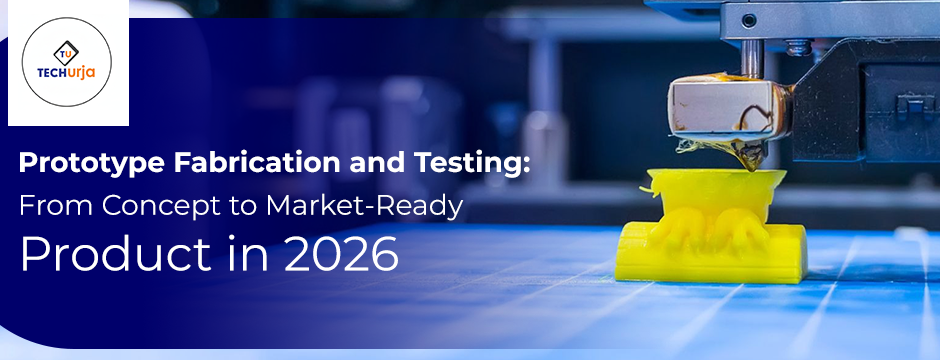
Prototype fabrication has matured significantly over the last decade. What once required weeks of tooling and manual adjustments can now be executed in days using advanced digital workflows.
Today’s fabrication ecosystem combines:
- Additive manufacturing
- Precision CNC machining
- Smart material simulation
- Cloud-based design collaboration
The integration of these technologies reduces iteration cycles and enhances accuracy.
Businesses increasingly rely on rapid prototyping services to validate geometry, functionality, and usability early in development. However, rapid output is only valuable when aligned with strategic validation goals.
Speed without testing discipline leads to flawed products entering expensive late-stage redesign.
Stage One: Concept Validation & Feasibility
Every successful product begins with a clearly defined problem statement. Engineers and product managers translate that need into functional requirements.
Before physical fabrication begins, teams evaluate:
- Technical feasibility
- Material compatibility
- Regulatory constraints
- Cost modeling
- Manufacturing scalability
Digital twins and simulation tools now allow early stress analysis, thermal mapping, and structural validation.
These simulations reduce wasted material and compress early experimentation. However, digital validation must eventually meet physical reality. Concept prototypes at this stage are often low-fidelity. Their purpose is not aesthetic perfection but functionality validation.
Stage Two: Engineering Prototype Fabrication
Once feasibility is confirmed, teams move into functional prototyping. This is where precision becomes critical.
At this stage, organizations rely on engineering prototype manufacturing processes to produce high-fidelity models that closely mirror final production conditions.
These prototypes are built using production-grade materials whenever possible. They replicate:
- Mechanical tolerances
- Structural load conditions
- Thermal performance
- Electrical integration
Unlike early mockups, engineering prototypes must withstand stress testing. They serve as the foundation for performance evaluation.
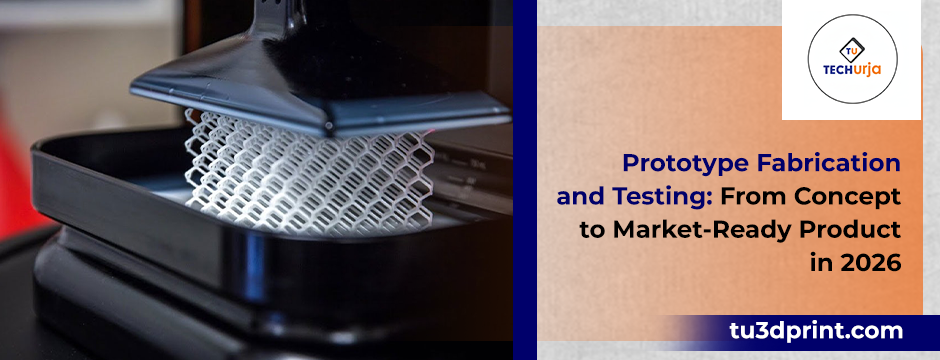
In 2026, hybrid manufacturing techniques are common. Additive manufacturing may produce complex internal geometries, while CNC machining ensures tight tolerances in critical areas.
Hence, this integrated approach reduces lead times while preserving mechanical integrity.
Stage Three: Structured Testing Along with Validation
A prototype is only as valuable as the testing framework surrounding it.
The product development testing process in 2026 is highly data-driven and iterative. Testing is no longer confined to the final stages. It runs parallel to design refinement.
Validation typically includes:
- Mechanical stress testing
- Environmental simulation
- User interaction trials
- Compliance verification
- Lifecycle durability assessments
Advanced labs use AI-assisted analytics to interpret performance data in real time. Instead of waiting weeks for lab reports, teams receive actionable insights immediately.
This allows rapid design adjustments without halting momentum.
Testing protocols also consider real-world unpredictability. Products must endure shipping, climate variation, vibration, and misuse scenarios. Therefore, ignoring these critical factors often leads to warranty claims and reputational damage post-launch.
Bridging The Gap between Prototype And Production
One of the most overlooked challenges in prototype fabrication and testing is transitioning from prototype to scalable manufacturing. A prototype may function perfectly in controlled conditions yet fail during mass production.
To avoid this, engineering teams conduct Design for Manufacturing (DFM) analysis early. This ensures that:
Components are cost-effective to produce at scale
Tooling requirements are realistic
Assembly processes are efficient
Quality control checkpoints are defined
Material substitutions are carefully evaluated. A prototype built with premium materials must be assessed for cost-optimized alternatives without compromising safety or performance.
In 2026, predictive manufacturing models simulate production bottlenecks before tooling begins. This proactive planning significantly reduces rework costs.
The Role of Iteration in Modern Development
Iteration is not a sign of failure. It is a strategic advantage.
Successful product teams embrace structured iteration cycles. Each prototype version integrates insights from testing, user feedback, and manufacturing analysis.
Modern workflows include:
Version-controlled CAD environments
Cloud-based collaboration platforms
Cross-functional design reviews
Continuous validation loops
This approach eliminates departmental silos. Engineering, quality assurance, compliance, and marketing collaborate from early stages. The result is fewer late-stage surprises.
Compliance As Well As Regulatory Readiness
In 2026, global compliance requirements are more stringent than ever. Products entering markets must satisfy safety, environmental, and performance regulations across multiple jurisdictions.
Prototype testing now integrates compliance validation early to prevent costly redesign after certification failure. Teams evaluate:
- Material safety standards
- Electrical certifications
- Environmental impact regulations
- Industry-specific quality benchmarks
Regulatory simulation tools help anticipate certification challenges. However, physical validation remains essential. Early regulatory alignment shortens time to market and reduces financial risk.
Digital Integration And Data-Driven Decisions
Prototype fabrication today generates large volumes of data. Sensors embedded in prototypes capture performance metrics during testing.
Cloud-based dashboards track:
- Stress distribution
- Thermal expansion rates
- Fatigue thresholds
- User interaction behavior
This data informs intelligent design refinements.
Machine learning models predict potential failure points based on accumulated testing history. Instead of reacting to failure, teams anticipate it. So, this predictive approach is transforming product development cycles.
Reducing Time-to-Market without Compromising Quality
Speed remains important, but not at the expense of reliability. The most competitive companies in 2026 balance agility with discipline.
They achieve this by:
Validating early and often
Investing in scalable fabrication methods
Aligning engineering and production teams
Embedding compliance into every stage
Prototype fabrication is no longer an isolated engineering function. It is integrated into the business strategy. Moreover, efficient workflows regarding prototype fabrication and testing shorten development cycles while preserving structural integrity as well as user safety.
Market Testing And User Feedback
Beyond laboratory testing, real-world user validation plays a crucial role.
Beta testing programs, pilot production runs, and limited market releases provide valuable insight. Users often identify ergonomic issues, usability friction, or feature gaps that engineers may overlook.
Henceforth, incorporating this feedback before full-scale launch prevents post-release revisions. In 2026, digital feedback channels allow near-instant analysis of user interaction data. This customer-centric approach strengthens product-market fit.
Sustainability in Prototype Development
Sustainability considerations increasingly influence fabrication decisions.
Organizations now evaluate:
- Material recyclability
- Energy consumption during production
- Waste minimization strategies
- Lifecycle environmental impact
Sustainable prototyping reduces long-term production costs and enhances brand credibility. Advanced material science enables biodegradable polymers and lightweight alloys that maintain durability while lowering the environmental footprint.
Sustainability is not a marketing add-on. It is integrated into the design architecture.
From Prototype to Market-Ready Confidence
The journey from concept to commercial launch is no longer linear. It is iterative, analytical, and collaborative. Successful teams in 2026 treat prototype fabrication as a validation engine rather than a creative experiment.
They combine digital simulation, high-precision manufacturing, structured testing, compliance alignment, and real-world feedback into a unified workflow. So, when these elements operate cohesively, the transition to mass production becomes predictable rather than risky.
Market-ready products are not accidental outcomes. They are engineered through disciplined prototyping and rigorous validation.
Final Thoughts
Prototype fabrication and testing have evolved into strategic pillars of product success.
Organizations that embrace data-driven iteration, scalable manufacturing readiness, and early compliance validation reduce costly delays and enhance product reliability.
In 2026, innovation is measured not only by creativity but by execution.
From initial concept modeling to high-fidelity engineering builds and structured validation cycles, every stage contributes to commercial readiness. The companies that master this integrated process will not only launch faster. They will launch smarter, safer, and stronger into competitive markets.
Before scaling prototype fabrication and testing, ensure your foundation is validated. Discover how proof-of-concept engineering eliminates early-stage risk and strengthens product feasibility before major investment decisions.
FAQs:-
What is the purpose of prototype fabrication in product development?
Prototype fabrication allows teams to transform a concept into a physical model for validation. It helps test functionality, design accuracy, and performance before moving to full-scale production.
How many prototype iterations are typically required before production?
The number varies depending on product complexity and industry standards. Most products go through multiple iterations to refine design, performance, manufacturability, and compliance requirements.
What is included in the product development testing phase?
Testing typically includes mechanical stress analysis, environmental simulations, durability checks, compliance verification, and user validation trials. The goal is to identify risks before commercial launch.
How does prototype manufacturing differ from mass production?
Proper manufacturing in prototype fabrication and testing focuses on validation and refinement using limited quantities. Mass production emphasizes scalability, cost efficiency, and consistent quality across high volumes.
Why is compliance testing important during prototyping?
Early compliance testing ensures the product meets regulatory standards before certification. This reduces the risk of costly redesigns, delayed launches, and legal complications in target markets.