
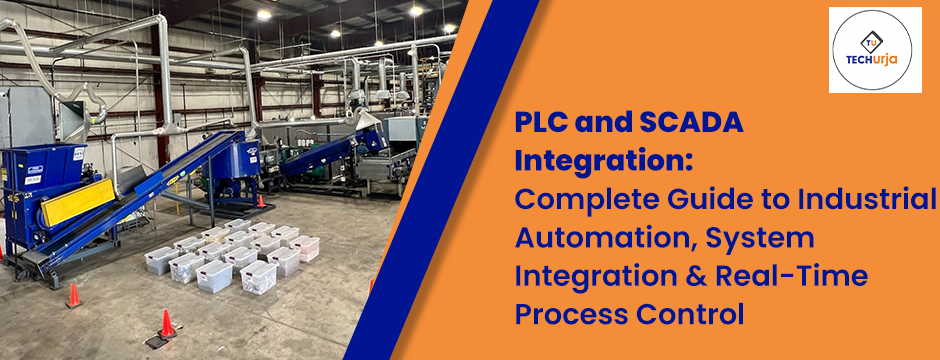
Industrial operations demand speed, accuracy, and reliability. Manual control no longer supports modern production goals. As industries scale, automation becomes essential for consistency and safety. PLC and SCADA integration forms the backbone of smart industrial environments by connecting machines, processes, and data into a unified control framework. When systems communicate seamlessly, operators gain clarity. Decisions become faster. Downtime reduces. Therefore, integrated automation defines competitive industrial performance today.
Understanding PLC and SCADA in Industrial Automation
Programmable Logic Controllers manage machine-level control. They execute logic, sequence operations, and respond instantly to process inputs. Supervisory systems provide visualization, alarms, and historical insights. When combined, PLC and SCADA integration creates a cohesive automation structure. PLCs handle execution. SCADA platforms deliver oversight. Together, they transform operations into controlled, data-driven environments. This coordination improves response times and strengthens process reliability.
Why Integration Matters for Modern Plants
Disconnected control systems slow operations. Operators switch screens. Data remains fragmented. Errors increase under pressure. Integration eliminates these gaps by centralizing control and monitoring. With PLC and SCADA integration, teams oversee multiple processes from a unified interface. Engineers troubleshoot faster. Managers track trends accurately. This approach also supports future expansion. Plants add equipment without disrupting existing operations, ensuring scalable growth.
Real-Time Monitoring and Process Control
Live data enables confident decision-making. Delayed feedback causes reactive adjustments and safety risks. Integrated systems deliver continuous updates from field devices. Operators visualize parameters instantly and respond proactively. Through SCADA monitoring and control systems, teams manage alarms, trends, and diagnostics efficiently. This real-time awareness improves stability, safety, and throughput across operations.
Engineering Foundations for Reliable Automation
Successful automation begins with structured engineering. Weak foundations create fragile systems. Strong planning ensures reliability. Engineers define I/O architecture, communication protocols, and control strategies early. This preparation prevents integration conflicts and reduces commissioning delays. Accurate layouts also support efficient installation. Clear engineering discipline strengthens every stage of PLC and SCADA integration.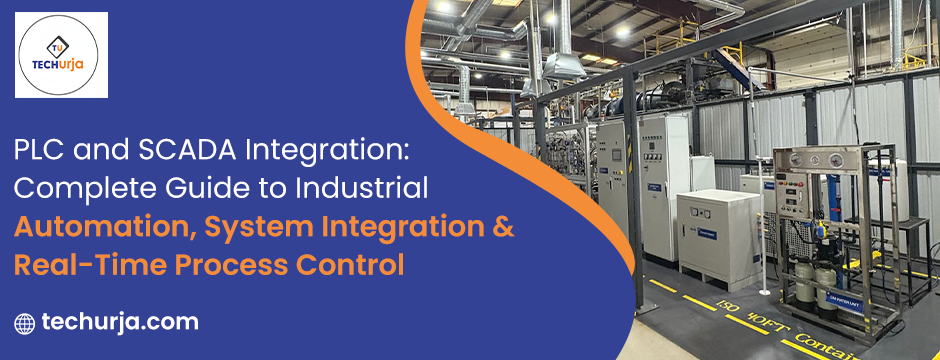
System Integration Across Industrial Environments
Each industry presents unique challenges. Process plants demand precise control loops. Water facilities require continuous monitoring. Energy systems depend on high availability. Through industrial automation solutions, integration adapts to specific operational needs. Engineers tailor logic, visualization, and safety layers to match plant behavior. This flexibility ensures consistent performance across diverse industrial sectors.
Control Logic, Safety, and Validation
Automation systems must operate safely under all conditions. Control logic governs normal operations. Safety interlocks protect equipment and personnel. Validation confirms correct behavior. Integrated testing verifies alarms, shutdowns, and fail-safe responses. With automation and control system integration, plants maintain compliance while improving reliability. Structured validation prevents unexpected failures during live operation.
Seamless Communication Between Systems
Reliable communication drives effective automation. Field devices, PLCs, and supervisory platforms must exchange data consistently. Engineers select protocols that support speed and compatibility. Network design focuses on stability and redundancy. This attention ensures smooth data flow throughout the system. Strong communication architecture supports dependable PLC and SCADA integration across all operational layers.
Reducing Downtime Through Integrated Automation
Downtime impacts productivity and profitability. Integrated systems reduce response time during faults. Operators identify root causes quickly. Maintenance teams access diagnostic data easily. Centralized monitoring supports predictive maintenance strategies. Plants schedule interventions before failures occur. This proactive approach improves uptime and operational confidence.
Data-Driven Optimization and Reporting
Automation generates valuable data. Integrated systems organize this data into actionable insights. Engineers analyze trends to improve efficiency. Managers evaluate performance metrics confidently. Historical records support compliance and audits. Through PLC SCADA system integration services, plants convert raw data into strategic intelligence that supports continuous improvement.
Supporting Long-Term Scalability
Industrial facilities evolve continuously. Automation systems must adapt without disruption. Integrated architectures support modular expansion. Engineers add new equipment without redesigning core systems. This scalability protects investments and supports long-term operational goals.
Why Choose TechUrja
At TechUrja, we focus on reliability, flexibility, and seamless integration. Our engineering approach ensures systems perform under actual operating conditions. We combine control programming, safety validation, and system architecture into cohesive solutions. With TechUrja, we help industries achieve smarter operations, reduced downtime, and sustainable performance growth.
Final Thought
In today’s fast-moving industrial landscape, efficiency, accuracy, and visibility define long-term success. Smart factories no longer rely on isolated control systems or manual supervision. Instead, they demand connected intelligence that adapts, scales, and responds instantly. PLC and SCADA integration delivers that intelligence by unifying control, monitoring, and data-driven decision-making into one cohesive framework. It empowers operators to act with confidence, engineers to optimize processes, and businesses to reduce risks while improving productivity. As industries continue to embrace digital transformation, integrated automation becomes more than a technical upgrade. It becomes a strategic foundation for resilience, safety, and sustainable growth. Organizations that invest in integrated control systems today position themselves to lead tomorrow’s competitive industrial environment.
Before implementing PLC and SCADA integration, see how 3D design visualization eliminates costly engineering mistakes early.
FAQ:-
1.What is PLC and SCADA integration?
It connects machine-level control with supervisory monitoring to deliver centralized, real-time process control.
2. Why is integration important for industrial automation?
Integration improves visibility, reduces downtime, and supports consistent operation across complex processes.
3. Can integrated systems support future expansion?
Yes. Modular architectures allow new equipment integration without disrupting existing operations.
4. How does SCADA improve operational safety?
SCADA provides alarms, trends, and diagnostics that enable early detection of abnormal conditions.
5. Which industries benefit most from integrated automation?
Process manufacturing, water treatment, chemical plants, and energy systems benefit significantly from integrated control solutions.